
From DPP pilot to 600,000+ product identities
Filou & Friends moved from a single-collection pilot to Digital Product Passports as a standing part of production — and then used the same identities for take-back and resale.
The challenge
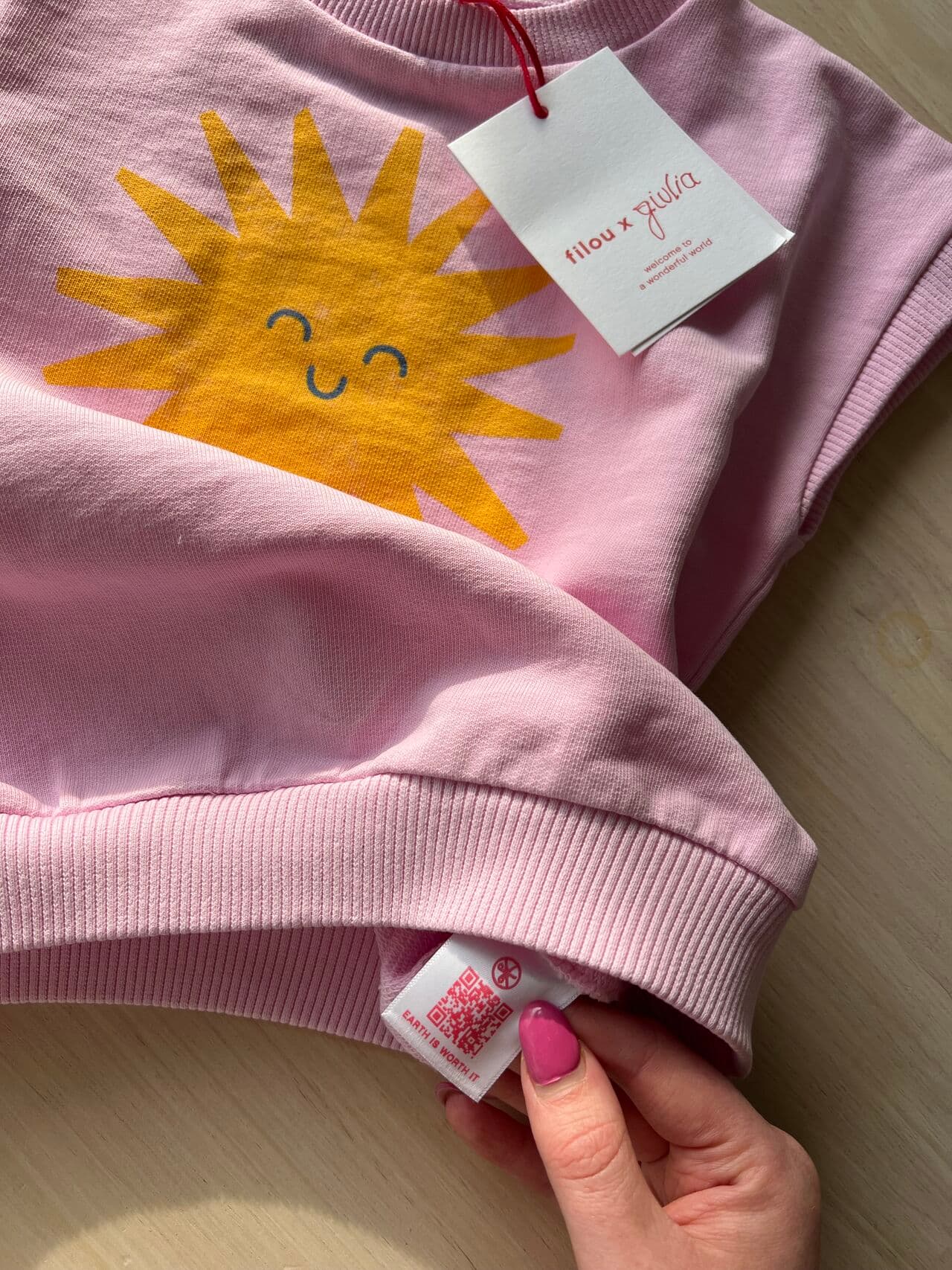
Filou & Friends wanted a product identity that would still be reachable years after a garment left the warehouse — not a marketing page per season. Compliance was the trigger, but the durable requirement was different: one identity per physical garment, so that a returned, repaired or resold item could still be recognised.
The information needed for that identity already existed. It was spread across production systems, supplier documents and spreadsheets, in the formats each party happened to use.
The starting point
No new data collection project. The pilot began with what the team already maintained:
- Product and style data
- Material composition
- Supplier information
- Production batches
- Certificates and documents
- Care and repair guidance
Implementation
Passport creation was fitted into the existing seasonal workflow rather than run beside it. Four practical steps:
- 01
Ingest what exists
Product, material and supplier information imported from files and systems, with documents attached as evidence.
- 02
Map once, reuse per season
Mapping and normalisation set up once, then re-applied to each new collection instead of being redone.
- 03
Identity at item level
Each garment received its own persistent identity, inheriting model and batch information rather than duplicating it.
- 04
Connect the garment
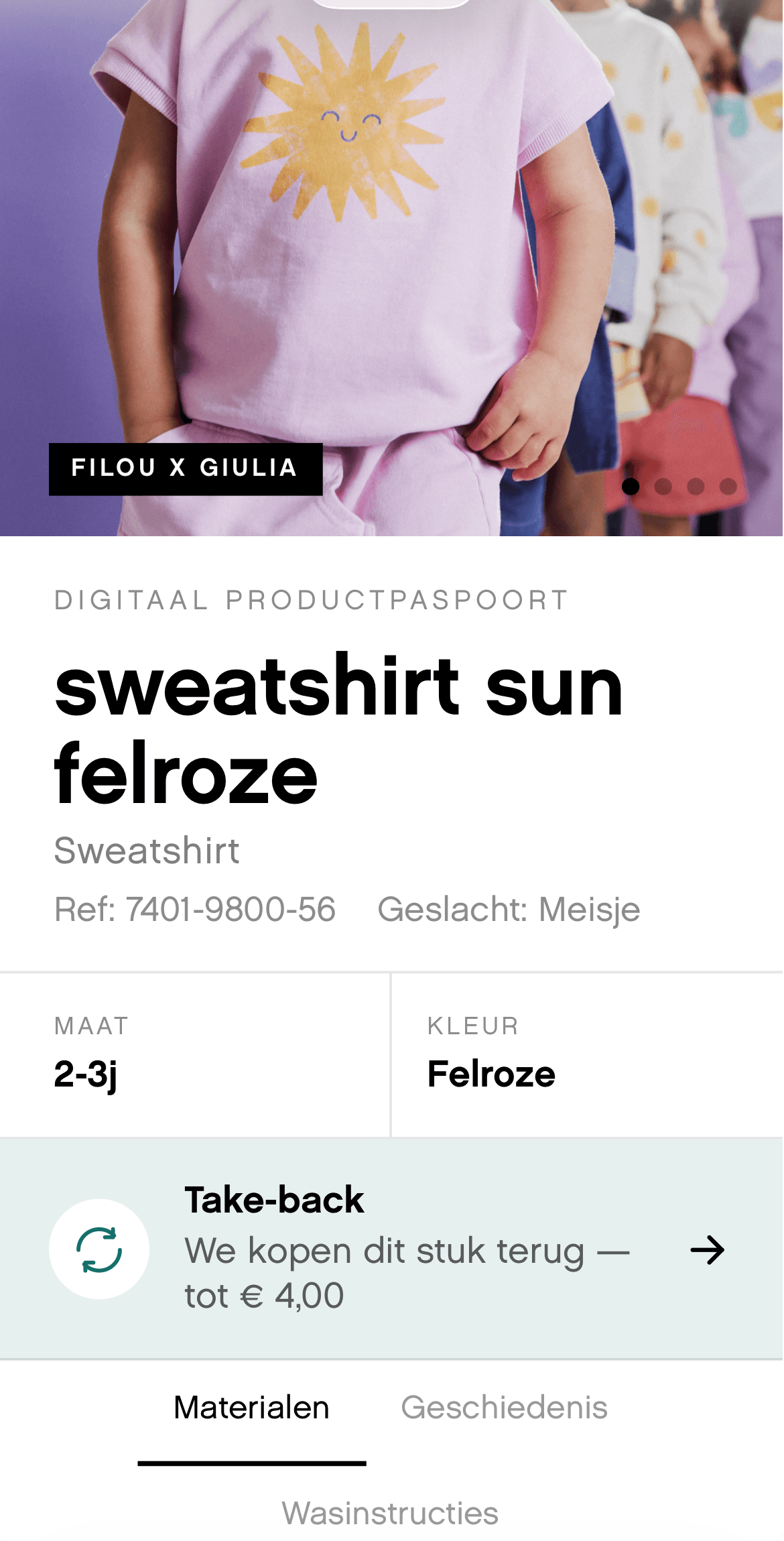
Codes generated in the existing label workflow, resolving to the brand's own passport experience.
Scale
Volume of this order only works if passport creation is part of production. The number is a by-product of the workflow, not a separate compliance exercise.
Beyond compliance
Because the identity is per garment, it keeps working after the first sale. The same passport supports take-back and resale: a returned garment is recognised, its history is known, and it can re-enter the market as a known product rather than an anonymous second-hand item.
Take-back
Identify the garment on return, without a receipt
Resale
Second life with the product information intact
Customer contact
Care and repair guidance at the product itself
The result
What began as a pilot is now a production deployment and a long-term working relationship. Passports are created as collections are produced, and the identity layer is available for lifecycle services as the brand chooses to use it.
Testimonial
“Bij Filou & Friends streven we ernaar om niet alleen kwalitatieve en creatieve kinderkleding te ontwerpen, maar ook om vooruit te denken op vlak van duurzaamheid en transparantie. Toch botsten we daarbij op een belangrijke uitdaging: hoewel we over veel productinformatie beschikten, ontbrak het ons aan een gestructureerde en schaalbare manier om deze transparant te delen met onze klanten én intern efficiënt te beheren.
De samenwerking met Quifactum, die ontstond binnen het living lab Infinitex, betekende hierin een echte doorbraak. Samen onderzochten we hoe digitale productpaspoorten een sleutelrol kunnen spelen in een circulair businessmodel voor de mode-industrie.”
Published with the customer's permission. Last reviewed: September 2026.
Would the same approach work on your catalogue?
Bring one collection or product range. We will show you the passport at model, batch and item level and where your data gaps are.